LIBRARY JOURNAL
★ Starred Review
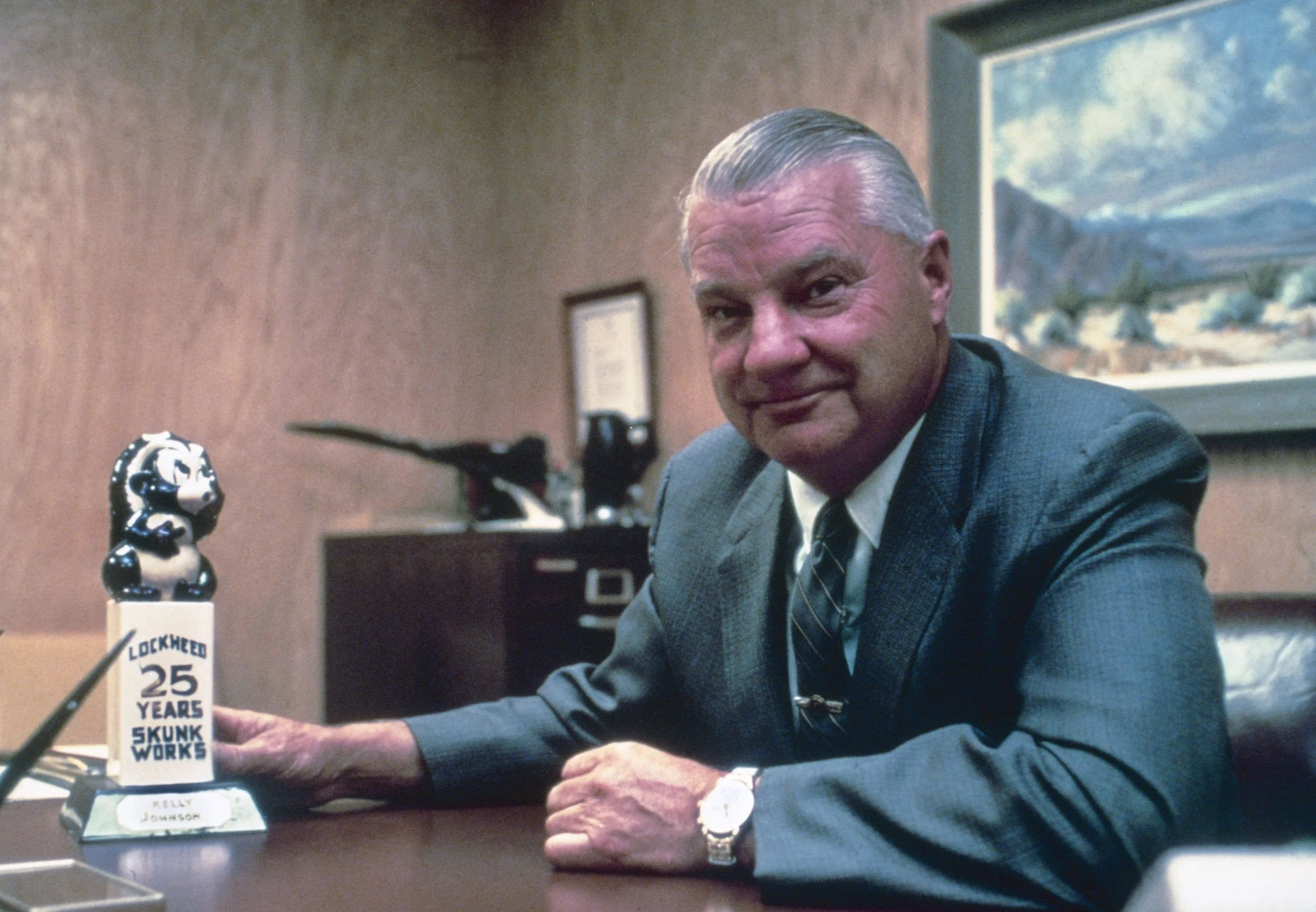
Dean’s sweeping account traces the rise of aviation company Lockheed’s secretive Skunk Works division and its legendary engineer, Clarence “Kelly” Johnson. From the Wright brothers through the Cold War, the book unfolds as a brisk, vivid chronicle of American political and military history told through the evolution of flight. Johnson, a University of Michigan graduate, headed west to Burbank. Arriving at Lockheed during the optimistic rollout of the Electra, he quickly exposed design flaws and proposed the now-iconic twin-tail solution. What followed were planes that won wars. The narrative brims with near crashes, financial brinkmanship, and high-speed ambition, often reading like Mad Men at 40,000 feet. Dean also includes Lockheed’s missteps, postwar losses, and Johnson’s own occasional miscalculations. Dean carries the story forward with Johnson’s successors, such as Ben Rich and the stealth program that produced the F-117 Nighthawk. Throughout the book, Dean emphasizes the relentless pace, secrecy, and collaboration with the CIA that made Skunk Works less a contractor than a shadow arm of government.
VERDICT This improbable story of how impossible machines reshaped modern warfare and technology itself is highly recommended for readers of military history, aviation, and American innovation.—Lee Gardner
***
KIRKUS REVIEWS
April 15, 2026
An engaging life of an inventor and aviation pioneer with an astonishing, if little-known, roster of accomplishments.
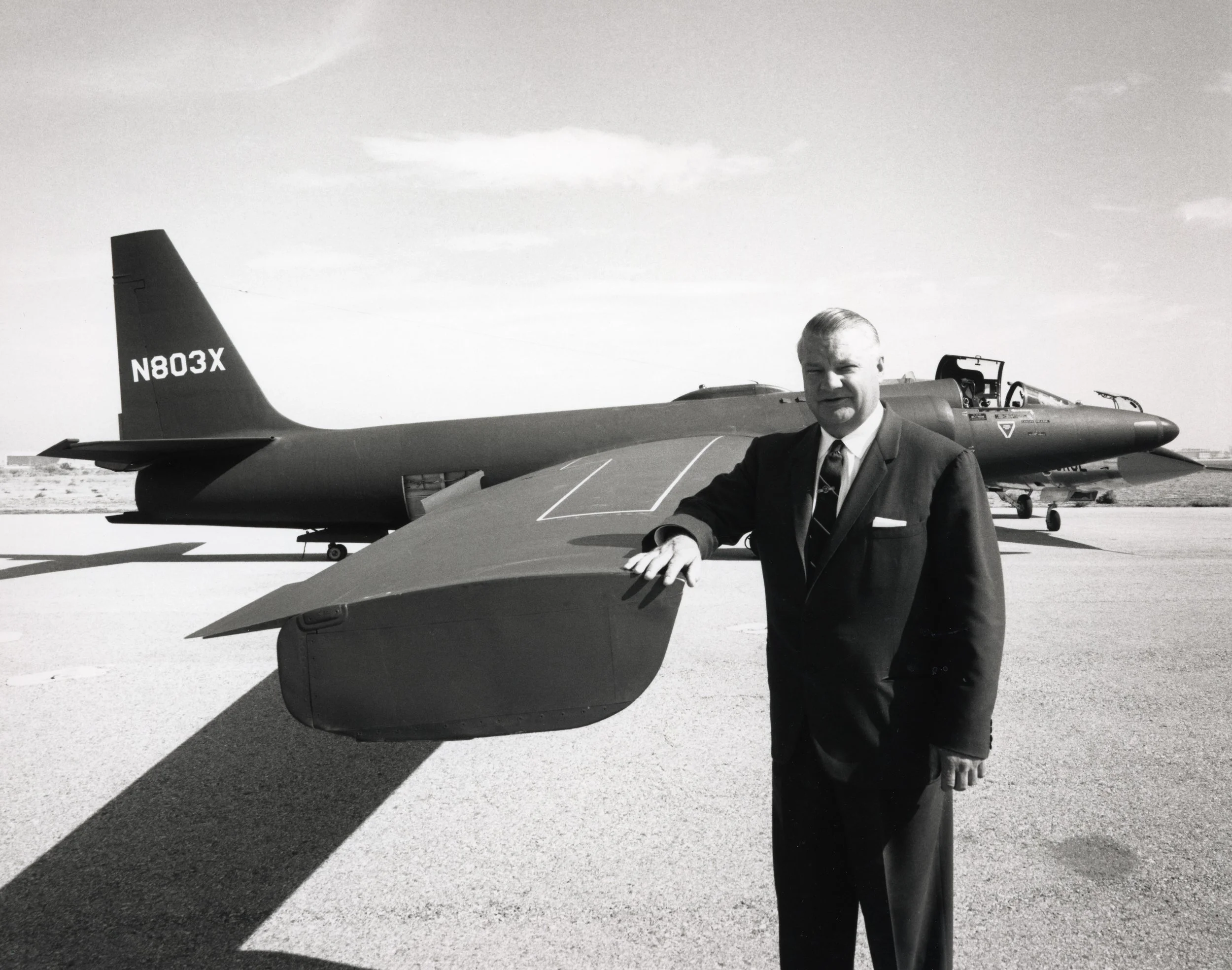
Kelly Johnson rarely sought publicity for himself, and, though not shy of accepting awards—his favorite being a Daniel Guggenheim medal “because it was for art and design”—he wasn’t a self-promoter. Yet, writes journalist Dean, no fewer than 40 aircraft had their origins on Johnson’s drawing board. Born at the dawn of aviation, Johnson was an ardent reader of books about science and engineering, bent, as he later put it, on being “like Tom Swift.” Later, he took on the works of Albert Einstein, intending to be one of the first people to understand them. Those around him recognized both Johnson’s genius and drivenness, including a flight instructor refusing to take money for instruction and instead telling Johnson to spend the fee on college. Johnson then went to California to take a job with the firm the brothers Loughead, later simplified to Lockheed, founded before going bankrupt. He started in the reborn company as “an eighty-three-dollar-per-month tool designer,” though, as Dean notes, Johnson and his colleagues were “Swiss Army knives” who could do anything. In time, Johnson led the “Skunk Works,” becoming an adept at new technologies—such as the wind tunnel and, in his spare time, streamlining a car that would win the Indy 500. He also came into the orbit of the aviation heroes of the time, among them Amelia Earhart and Wiley Post. Johnson’s Lockheed came into its own in World War II, with him designing a range of warplanes. After the war ended, the company was bound up with the defense industry, although Johnson tried constantly to defeat the bureaucracy while coming up with things, like the U-2 spy plane and the stealth bomber.
A key figure in the annals of aviation technology, Johnson well merits this detail-packed life.
***
BOOKLIST
April 1, 2026
In 1943, the first operational jet fighter aircraft was engineered and built secretly under a circus tent in Burbank, California, in only 143 days. Dean introduces Clarence L. “Kelly” Johnson’s Skunk Works, a research and development division of Lockheed run with Johnson’s unique methodology. Johnson and his Skunks succeeded in the unimaginable: the design, production, and flight testing of revolutionary aircraft, often well under budget. This unsung genius of aviation engineering was forced to keep mostly in the shadows due to the top-secret aircraft he was developing, making interviews scarce. Dean’s extensive research compiles resources, including log books from Johnson himself, to detail the history of Lockheed Skunk Works through a biography of Kelly Johnson, giving soul to what would otherwise be a dense recounting of aircraft advancements. Johnson’s legacy with projects such as the U-2 reconnaissance aircraft to Area 51 will interest a wide audience, but it is the aviation enthusiasts who will truly relish this extensive history of Skunk Works and Kelly Johnson. — Kristen Shaw
***
The Wall Street Journal
May 19, 2026
“Many in the Defense Department didn’t realize that Johnson’s streamlined, entrepreneurial management style at the Skunk Works was the reason it produced results, often at lower costs than other more-audited defense programs. As Mr. Dean points out, in the age of sky-high weapons prices and cost-overruns, each U-2 cost less than $1 million, or about $12 million today.
As Gen. Leo Geary of the Air Force Special Projects Office later said, every one of the Skunk Works projects overseen by Johnson operated outside the usual Pentagon procurement process and thus had “two things in common. All were eminently successful and all were done outside the system. Now, if that doesn’t tell us something, I don’t know what does. This is the legacy that Kelly has really left us.”
Read the full review here.
***
The Big Think
June 3, 2026
The WWII engineer who invented Silicon Valley’s startup playbook
Long before “move fast and break things,” aerospace pioneer Kelly Johnson built the Skunk Works — Lockheed Martin’s R&D arm famous for its problem-solving and revolutionary creations.
by Ross Pomeroy
In October 1982, millions of Americans learned about Kelly Johnson for the first time. On CBS’s 60 Minutes, the grizzled 72-year-old recounted his involvement in numerous secret military projects over his impressive career in aviation. He also predicted the future: unmanned, autonomous aircraft and satellites that enable video conferences via data streaming at the speed of light. Yes, Johnson forecasted drones and FaceTime decades ahead of their arrival.
How could he be so prophetic? Because he had been building the future of aerospace for half a century. Moreover, decades before Dario Amodei, Mark Zuckerberg, Elon Musk, Steve Jobs, or Bill Gates reshaped entrepreneurship, he crafted the cultural and organizational operating system upon which all modern tech startups run…
Read the full story here:
***
Foreign Policy
The Impossible Factory: The Remarkable True Story of Kelly Johnson and the Lockheed Skunk Works, America’s Innovation Machine
Reviewed by Lawrence D. Freedman
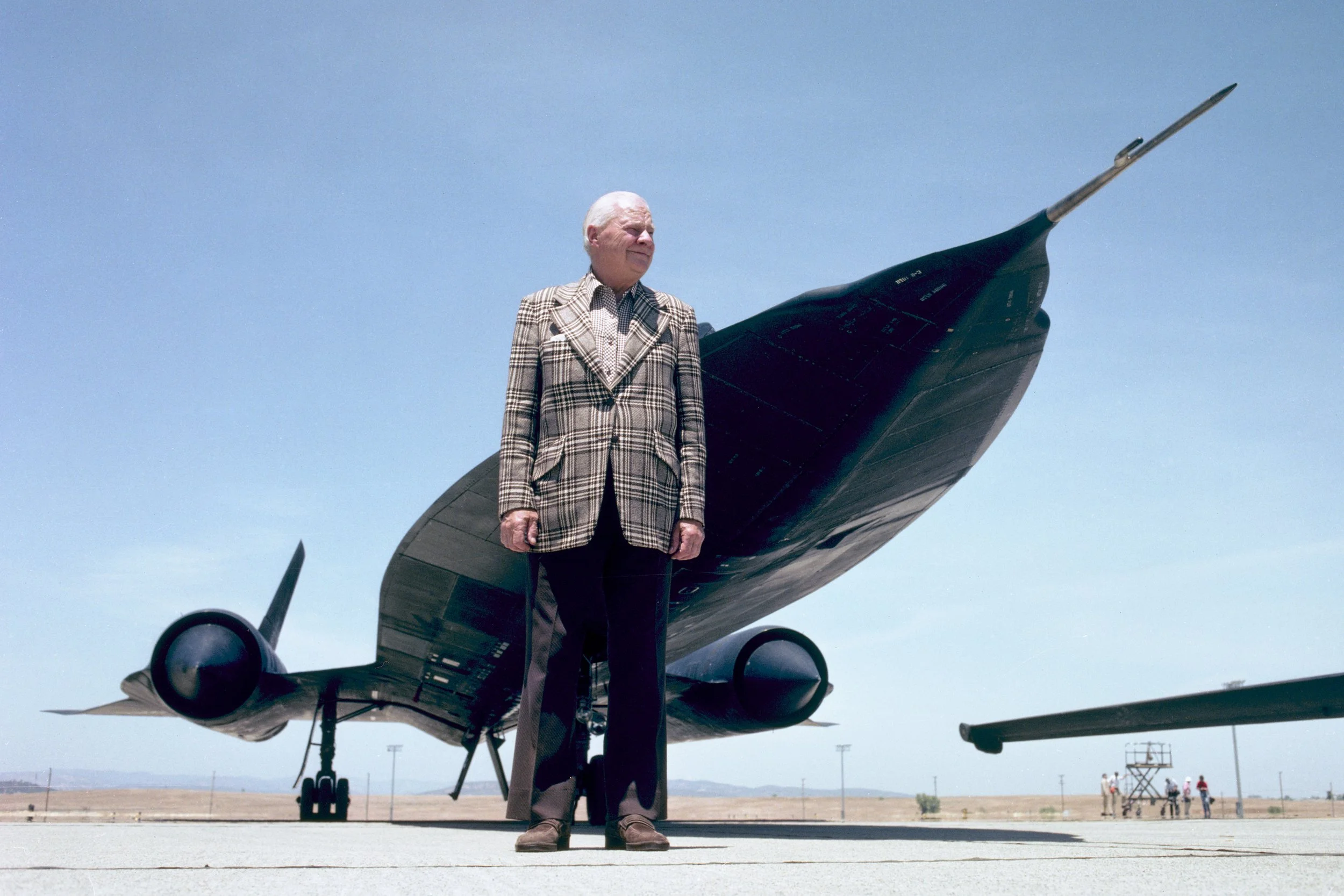
In 1933, Clarence “Kelly” Johnson, a young engineer, joined Lockheed, then a young aircraft company. There, he masterminded the design, construction, and testing of aircraft that made aviation history, such as the P-38 Lightning fighter, which played an important role in World War II, and the XP-80, the first American fighter jet. Johnson was innovative, and his approach to management depended on strong leadership, minimal hierarchy and regulation, and demanding deadlines. He founded Skunk Works, Lockheed’s research and development arm, which became a model for innovation under pressure. Reclusive workaholics are not natural subjects for biographies, but Dean does an excellent job of illuminating Johnson’s methods and even making aircraft production interesting. He explains why Johnson’s work mattered: at crucial moments during World War II and the Cold War, he delivered the goods, namely, the U-2 and SR-71 spy planes.
***
Live and Let’s Fly/United Airlines
United Airlines CEO Scott Kirby Shares His Updated Reading List
Scott Kirby recently explained that he spends about three hours reading each day, and the United Airlines CEO has now shared an updated list of seven books he particularly enjoyed this summer. Kirby acknowledged that not everything he read deserved a recommendation, but these books made his list:
Unreasonable Hospitality by Will Guidara
The Impossible Factory by Josh Dean
Freedom’s Forge by Arthur Herman
The Sleepless Ape by David R. Samson
Sea of Tranquility by Emily St. John Mandel
The End of Eternity by Isaac Asimov
Tolkien and the Great War by John Garth
The Impossible Factory examines Clarence “Kelly” Johnson and Lockheed’s legendary Skunk Works, which produced aircraft including Kirby’s favorite, the SR-71 Blackbird (something, by the way, my uncle worked on!). Kirby said he wishes everyone at Boeing, Airbus, GE Aerospace, Pratt & Whitney, and Rolls-Royce would read it and consider what it teaches about designing and building aircraft and engines more quickly.